The variety of
Kawakawa
Deep olive-green pounamu
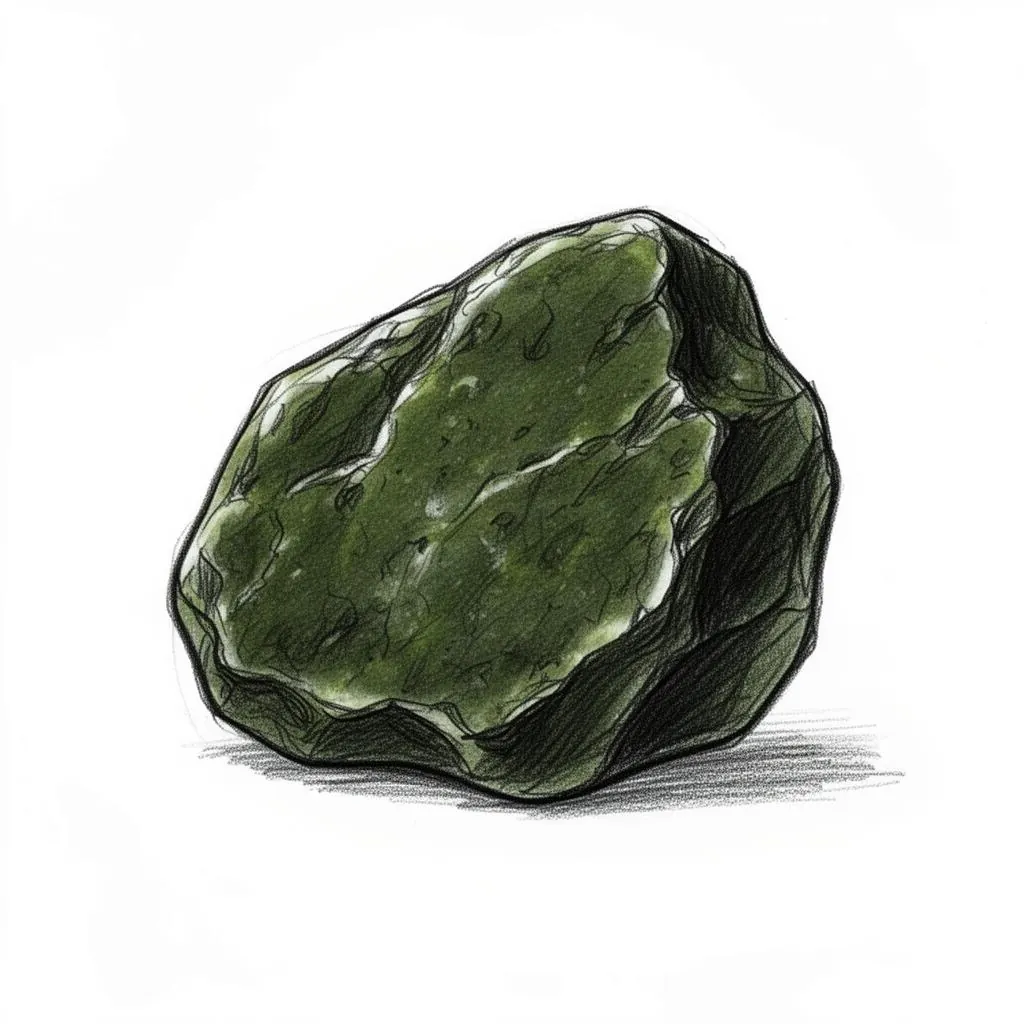
Kawakawa is the working green of pounamu — the deep olive variety named for the leaf of the kawakawa tree. It is the most common form, and for many carvers it is the stone they reach for first.
Where it comes from
Kawakawa is found along the rivers of Te Tai Poutini (the West Coast of Te Waipounamu), most notably the Arahura, the Taramakau and the Hokitika. The river carries it down from the alpine source, polishing the outer skin grey and hiding the dark green inside.
It is a true nephrite jade — dense, tough, and finely interlocking in its grain. This is the variety that has carried the bulk of Māori carving tradition for centuries.
How to recognise it
Held to the light, kawakawa is opaque to faintly translucent at the edges. Its colour is a deep, leaf-like green — sometimes with darker flecks, sometimes with subtle banding. The surface takes a soft, waxy polish rather than a glassy one.
Good kawakawa rings cleanly when tapped, a sign of a tight, unflawed grain. Carvers often describe it as a stone that holds its line — it will take a fine edge without chipping.
Why carvers choose it
Kawakawa is the everyday stone of the carver's bench — strong enough for blades and large pendants, generous enough in colour to suit any form. It is the variety most often used for toki, manaia and larger hei tiki.
It is also the stone most often gifted, simply because it is the most readily available. That does not make it lesser — a well-carved kawakawa piece is as treasured as any other.
Kawakawa is the workhorse and the wardrobe of pounamu — quiet, deep, and dependable. The green of a New Zealand forest in low light.