The variety of
Īnanga
Pearly grey-green pounamu
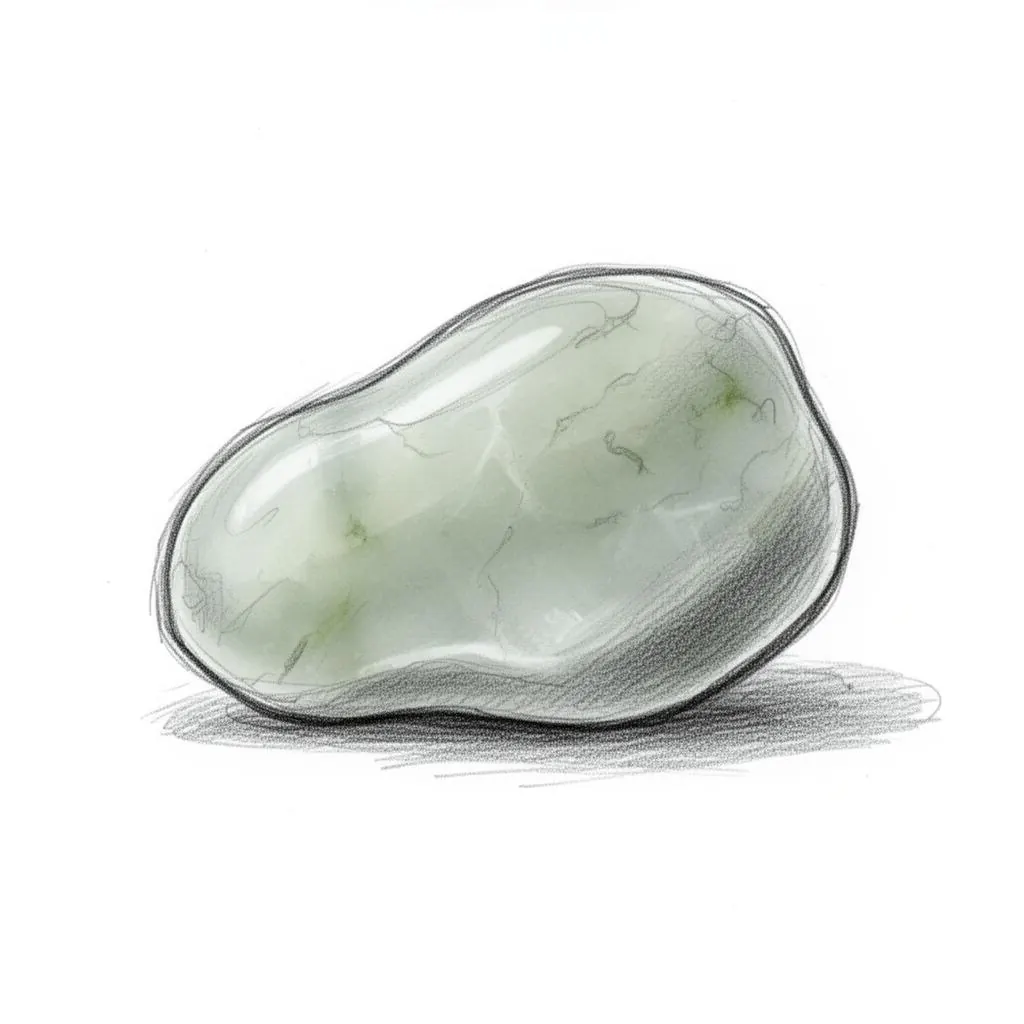
Īnanga is the pale, pearly variety of pounamu — a soft grey-green named after the īnanga, the young whitebait whose silvery bodies fill the rivers of Te Waipounamu in spring.
Where it comes from
Like kawakawa and kahurangi, īnanga is a true nephrite found in the rivers of the West Coast and in the Wakatipu area further south. It tends to come from the higher, colder reaches — stone that has spent a long time in moving water.
It is the second most common variety after kawakawa, but good clean īnanga, free of dark mottling, is much rarer than first impressions suggest.
How to recognise it
Īnanga is pale — the colour of river mist or the silver belly of a small fish. It can read as soft grey, milky green, or a chalky off-white with a green cast. It is opaque to softly translucent, and takes a gentle, satin polish.
The te reo name is exact: hold a polished īnanga pendant in low light and it has the same dim, pearly glow as a school of whitebait turning in shallow water.
Who it suits
Īnanga carries a quieter, more reflective character than the deep greens. It is often chosen for pieces gifted in remembrance, for grief, for a settled stage of life, or for someone whose nature is calm rather than loud.
It is also a striking stone for understated forms — a smooth koru or a simple drop — where the softness of the colour is allowed to lead.
Īnanga is the still water of pounamu. Quieter than kawakawa, less rare than kahurangi, but unmistakable in the hand.