The meaning of
Hei Tiki
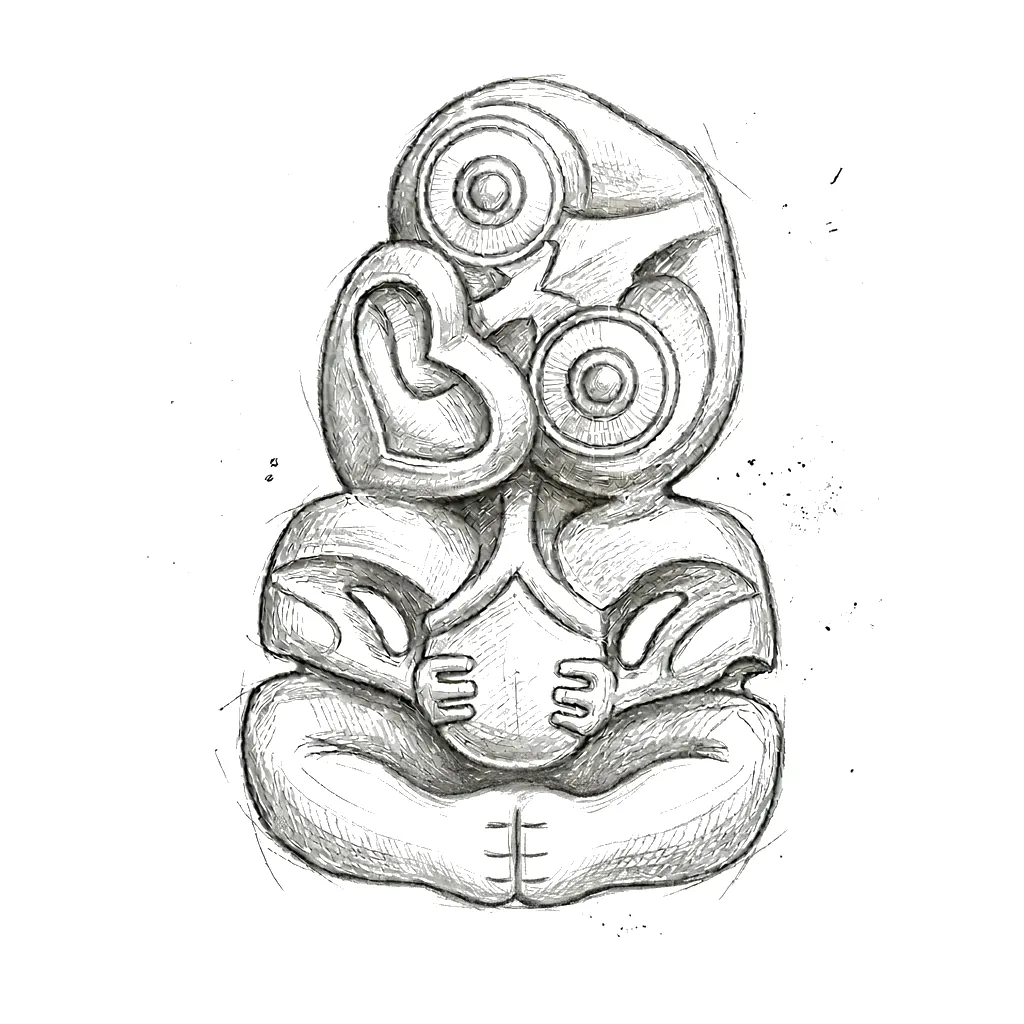
The hei tiki is the most personal of all pounamu forms — a small human figure worn at the neck, representing an ancestor, a guardian, or the first child of creation. Of all the shapes, it is the most carefully gifted and the most deeply held.
Origin and meaning
There are several stories of how the hei tiki came to be. Some traditions describe it as a representation of Tiki, the first man. Others describe it as an ancestor figure, carrying the wairua (spirit) of someone who has passed. In every story, the tiki is a person — not a symbol.
Hei tiki are associated with fertility, good fortune, and the unbroken line of whakapapa (ancestry). They are believed to grow more powerful with time, absorbing the wairua of every wearer they have known.
Heirloom and inheritance
Hei tiki are passed down through generations. A tiki that has been worn by a grandmother, a mother and a daughter is not three pieces of stone — it is one continuous presence, and the most treasured of all family taonga.
When a hei tiki is given new, it is given with the understanding that it will one day be passed on. The wearer is, in a sense, the first chapter of a much longer story.
Choosing the right one
Take time. Look for a piece whose face feels present — not generic, not decorative, but settled and watchful. A hei tiki is rarely chosen quickly. Many people find that, after looking at many, one piece simply will not let them leave.
There is a saying among carvers and collectors: you do not choose the hei tiki — the hei tiki chooses you. Whether or not you take that literally, it is worth waiting for the piece that does.
A hei tiki is the most quietly powerful of the pounamu shapes. It is a piece that becomes more itself with every year it is worn.