The guide

    The meaning of pounamu shapes.

    Pounamu is rarely chosen lightly. Each shape carries its own meaning — drawn from the land, the sea, and the long memory of the people who first carved it. Use this guide to find the form that speaks to you, or to the person you are gifting.

    01Found, not made

    For a thousand years, the Arahura has carried pounamu down from the alpine spine of Te Waipounamu. The carver does not search — he waits. The river decides which stone is ready, and surrenders it at low water: grey on the outside, holding green light within.

    02Listening to the stone

    Each boulder is read before it is cut. The grain, the flaws, the colour beneath the skin — all of it tells the carver what the stone wants to become. Diamond saws shape it; hands and water finish it. Some pieces take a week. Some take a year.

    03A stone with a name

    A finished pounamu is no longer an object. It is a taonga — a treasure carrying wairua, the breath of the place it came from. Traditionally it is gifted, never bought for oneself, carrying the story of every hand before.

    01

    Koru

    Hand-drawn pencil sketch of Koru

    The koru is the unfurling frond of the silver fern — one of the most recognised symbols in Māori art. Its inward spiral represents new life, growth, strength and peace. The way it slowly opens outward speaks to a journey: the unfolding of potential, the steady forward motion of a life finding its shape.

    Traditionally a koru is gifted to mark a beginning — a new chapter, a new role, the birth of a child, a fresh direction. It carries the quiet reassurance that growth happens in its own time, on its own path.

    When choosing a koru, look for a piece whose curve feels balanced and unhurried. The best carvings have a sense of breath in them — the spiral neither too tight nor too loose. A koru worn close to the body is said to draw new opportunity toward its wearer.
    02

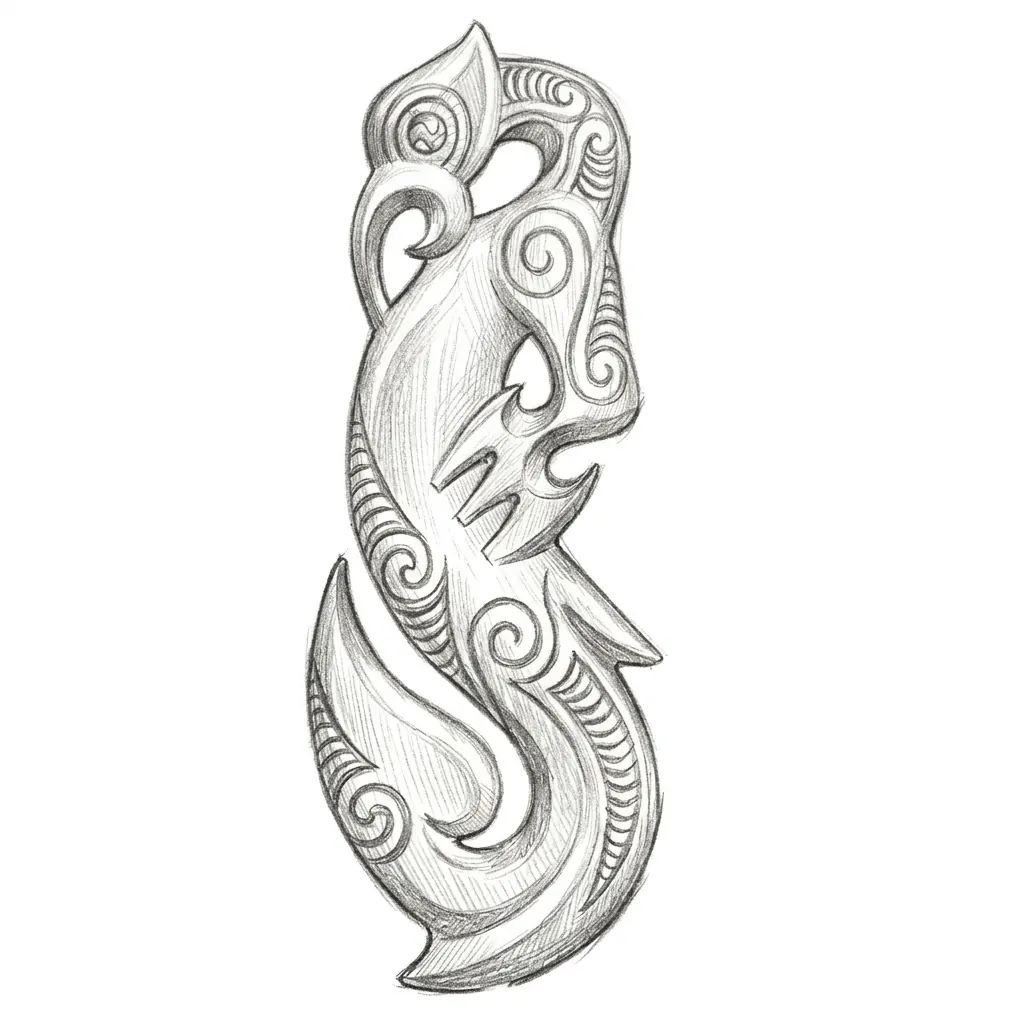
    Manaia

    Hand-drawn pencil sketch of Manaia

    The manaia is a guardian figure — often depicted with the head of a bird, the body of a man and the tail of a fish, representing the union of sky, earth and sea. It is regarded as a messenger between the human and spiritual realms, and a watchful protector of the wearer.

    Manaia are traditionally given to those entering a period of change or uncertainty — a long journey, a new home, a new responsibility. The figure is said to carry mana (authority, strength) and to ward off harm, both seen and unseen.

    When selecting a manaia, look for a piece whose form feels alert and alive. The carving should have a clear silhouette and a sense of poise, as if the figure is standing watch. A manaia is a serious gift — one given with intention.

    03

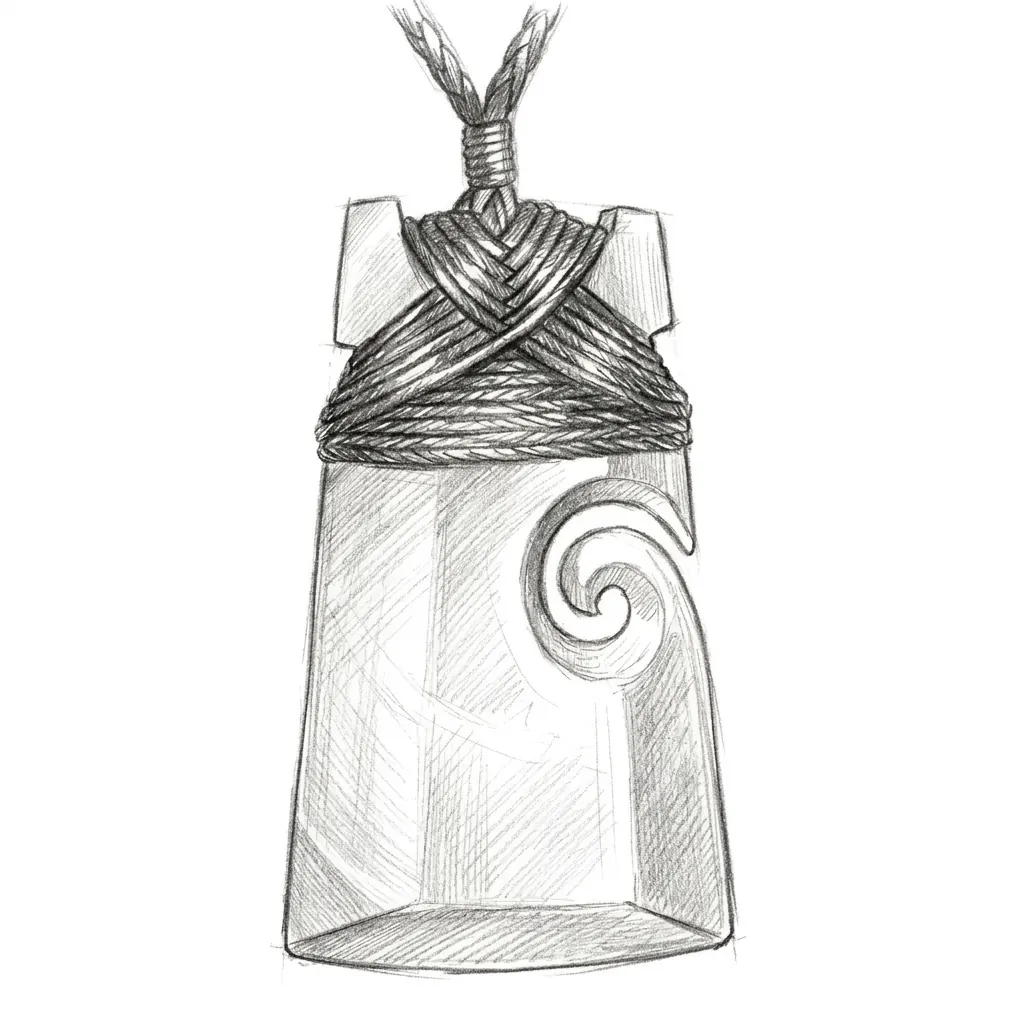
    Toki

    Hand-drawn pencil sketch of Toki

    The toki is shaped like the blade of an adze — the tool used by master carvers and builders. It is a symbol of strength, determination and skill, traditionally associated with leaders, craftspeople and those who shape the world around them through deliberate effort.

    A toki is gifted to mark accomplishment, the taking on of authority, or the beginning of a demanding undertaking. It is worn by those who lead — quietly, steadily, by example.

    When choosing a toki, look for clean edges and a confident weight. The blade should feel decisive in the hand. Some toki are worn point-down, in the manner of a working tool; others are worn point-up, as a symbol of mana held aloft.

    04

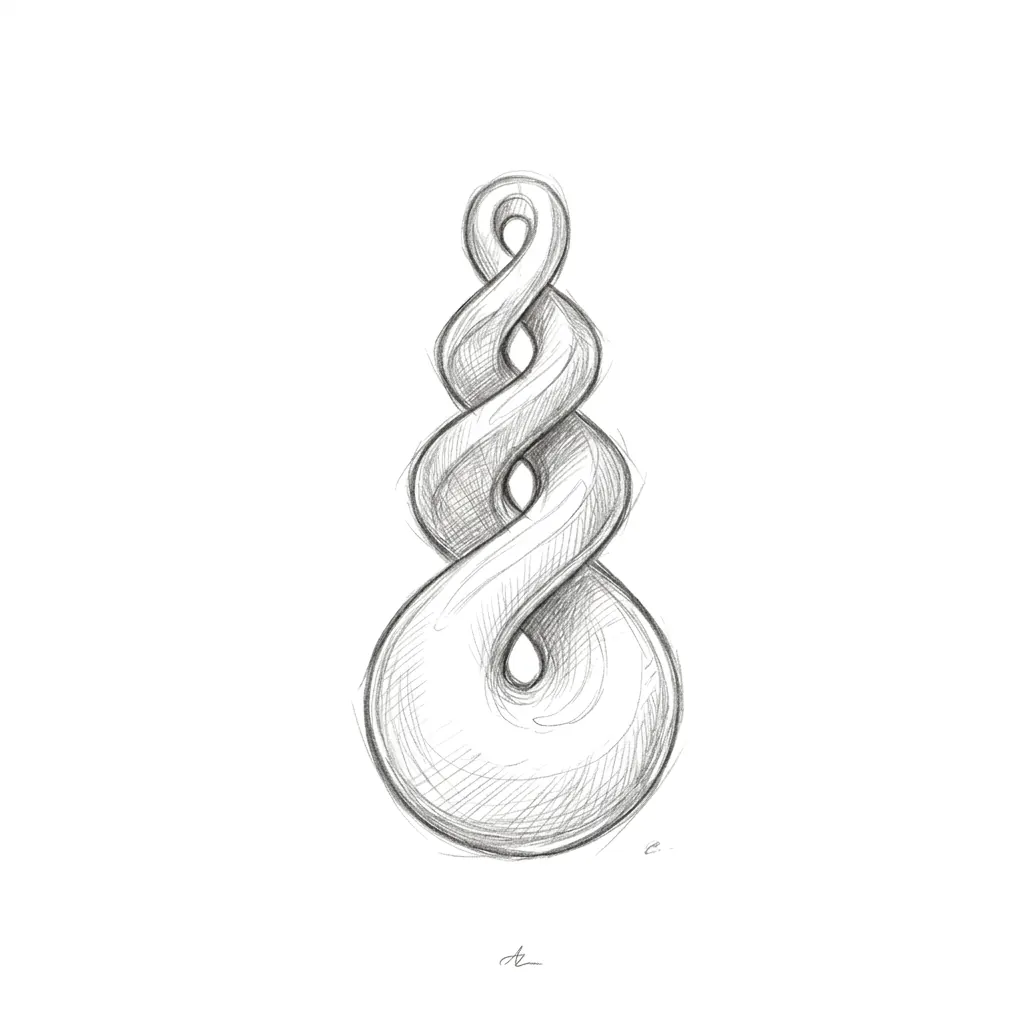
    Pikorua

    Pikorua (Twist)

    Hand-drawn pencil sketch of Pikorua

    The pikorua, or twist, is two strands of pounamu woven endlessly into one another — a symbol of the bond between two people, two families, or two cultures. The path may twist and turn, but the strands never separate.

    It is the traditional gift to mark a partnership: a marriage, a deep friendship, the joining of two whānau (families). A double twist speaks of two lives entwined; a triple twist speaks of past, present and future, or of three people bound together.

    When choosing a pikorua, look for a piece where the strands feel evenly weighted and the curves flow into one another without interruption. The eye should travel the full loop without ever finding an end — that is the heart of its meaning.

    05

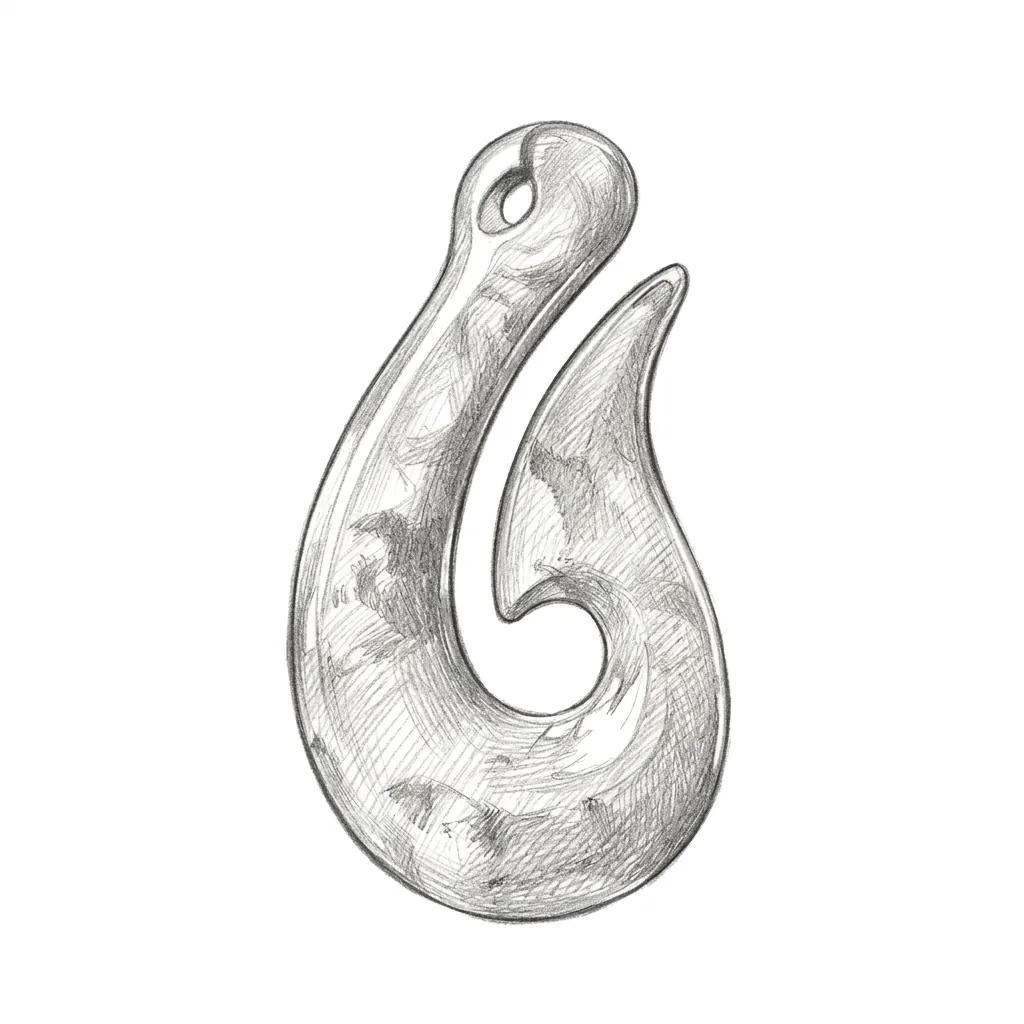
    Matau

    Matau (Hook)

    Hand-drawn pencil sketch of Matau

    The matau is shaped like a fish hook — a tool of survival, abundance and skill on the water. It represents prosperity, good health, and safe travel, especially across the sea. For an island people, the matau holds particular weight: it is the shape that brought food, provision and homecoming.

    It is traditionally given to those setting out on a journey, taking up a new venture, or simply as a wish for steady fortune in the years ahead. Many travellers wear a matau as a quiet promise of safe return.

    When choosing a matau, look for a clean, confident curve and a tip that feels purposeful — the hook is a working shape, and the carving should honour that. A matau worn at the throat is said to keep its wearer well-provisioned in all senses of the word.

    06

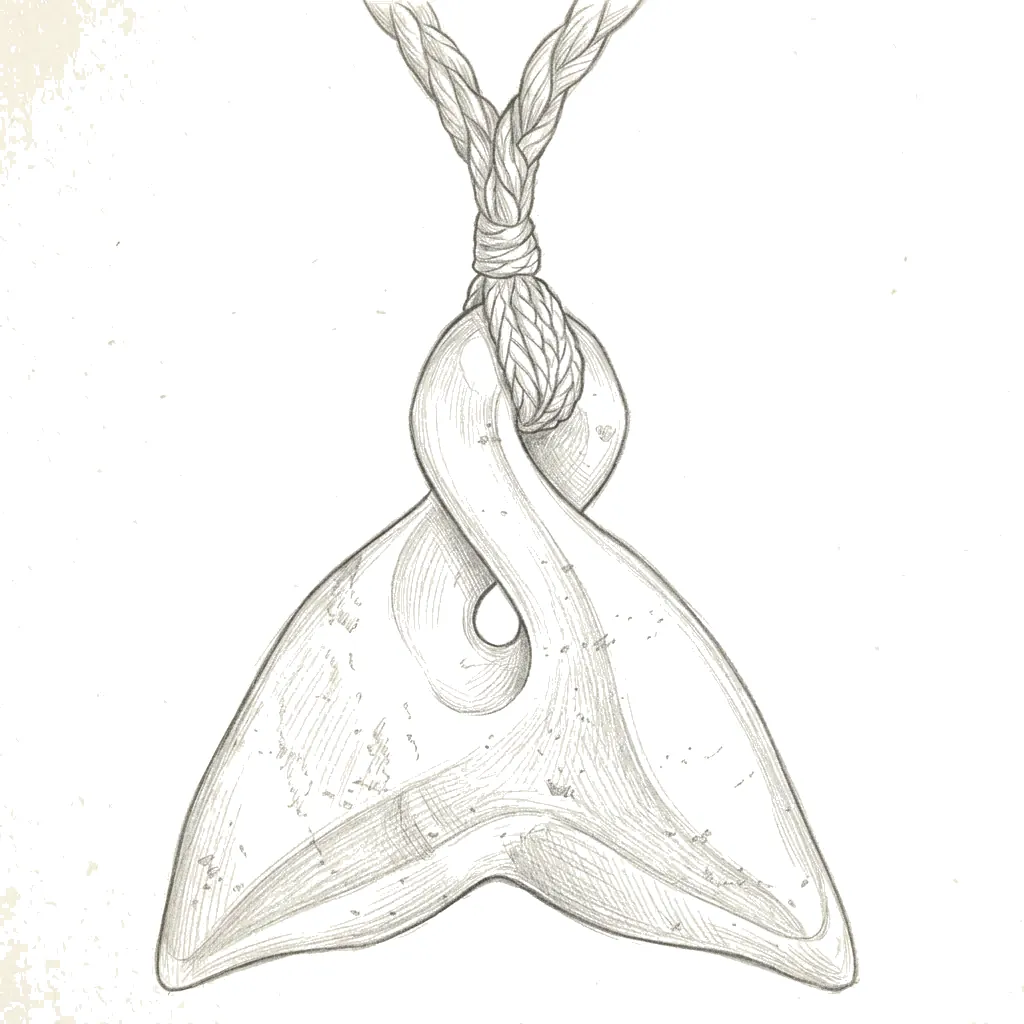
    Whale Tail

    Tohorā

    Hand-drawn pencil sketch of Whale Tail

    The whale tail, or tohorā, is one of the most powerful symbols of the sea in Māori art. Whales are regarded as taniwha and kaitiaki — guardians of the deep — and the shape of the fluke recalls the moment a whale sounds, slipping back into the ocean with quiet, unhurried strength.

    A tohorā carving carries the meaning of speed, strength, and safe passage across water. It is a gift for travellers, for those who navigate uncertainty, and for anyone whose life is bound up with the sea. It also speaks of family — whales travel in tight pods, and the tail is a reminder of the bonds that hold a group together over long distances.

    When choosing a whale tail, look for a clean V with flukes that feel evenly weighted and a confident curve through the centre. The best carvings have movement in them — the sense of a tail still in motion, just about to disappear beneath the surface.

    07

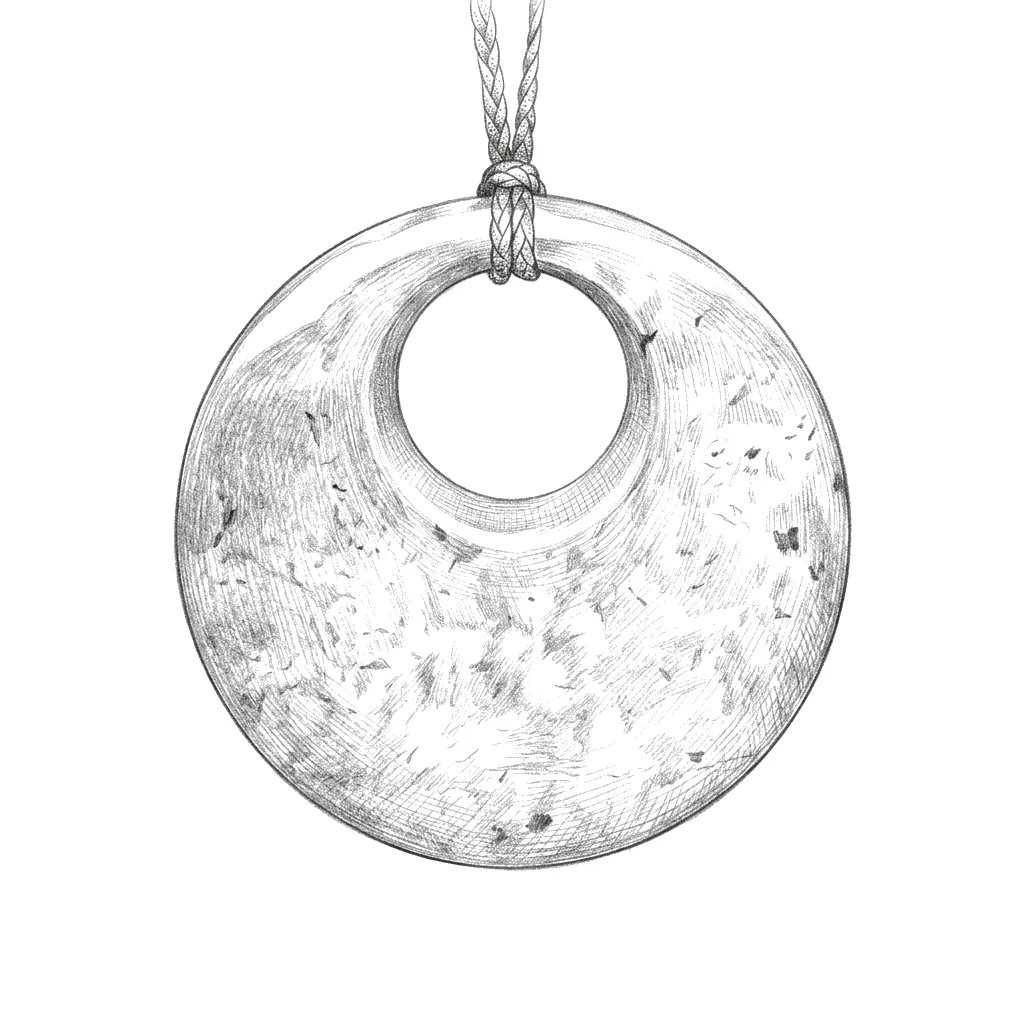
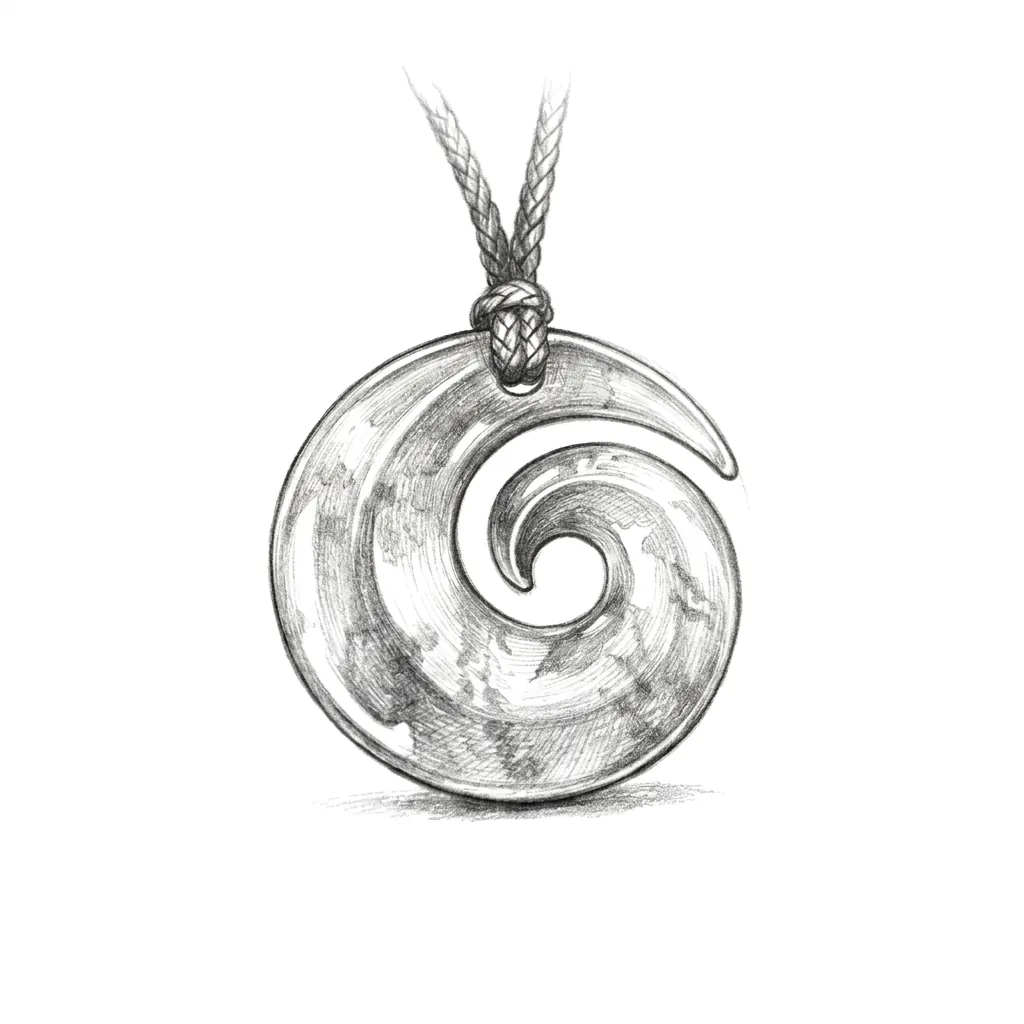
    Porowhita / Circle

    Porowhita

    Hand-drawn pencil sketch of Porowhita / Circle

    The circle, or porowhita, is the simplest and most universal of the pounamu forms — and one of the most quietly meaningful. With no beginning and no end, it speaks of wholeness, unity, and the cycles that shape a life: the seasons, the tides, the turning of generations.

    A pounamu disc is often worn as a daily piece — a smooth, calming shape held against the skin. Some are carved with a small inner cut-out, opening a window through the stone; others are left as a single unbroken plate, polished until the colour seems to move within it. Both readings are correct: one speaks of the journey through, the other of the journey around.

    A circle is gifted to mark continuity — the closing of one chapter and the steady opening of the next, the strength of family, the return home after a long absence. When choosing a disc, look for a piece whose surface feels even and whose colour holds the eye. A good porowhita should feel complete in the hand, with nothing missing and nothing to add.

    08

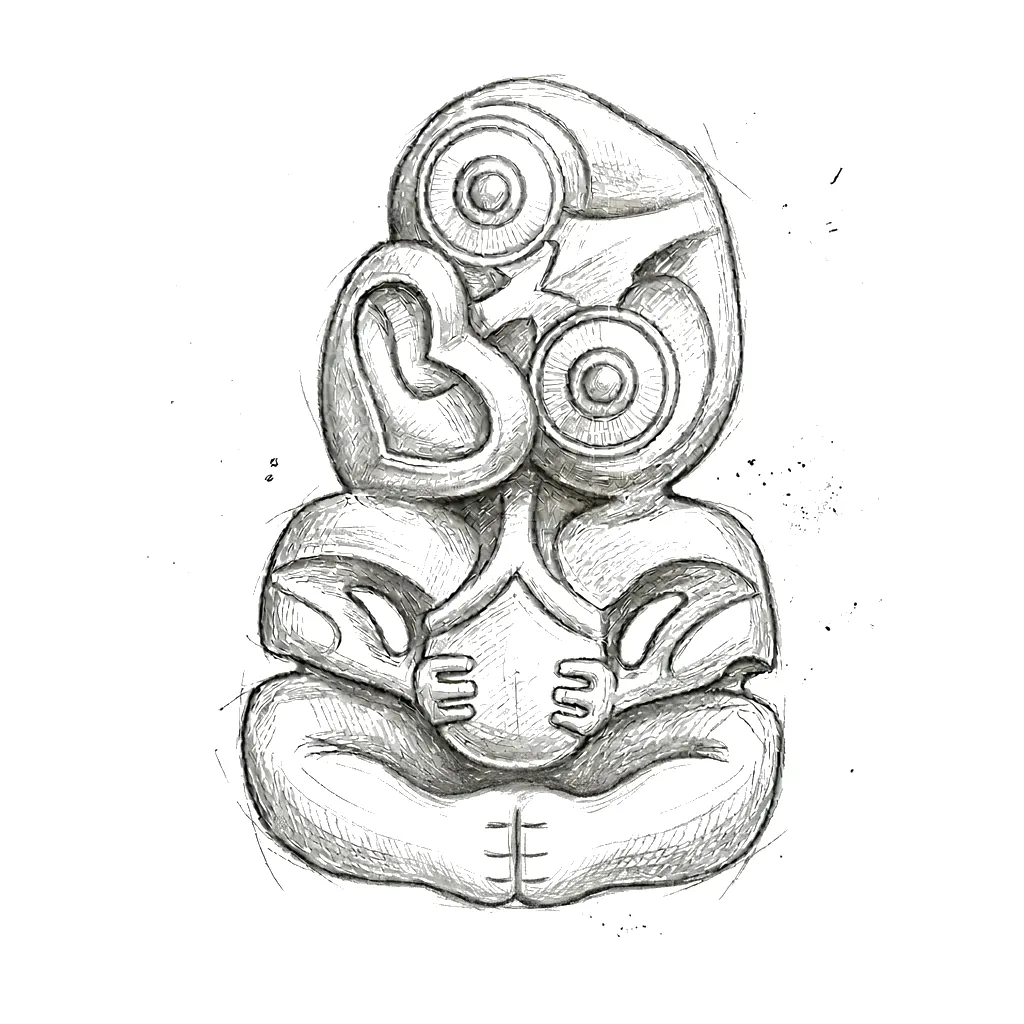
    Hei Tiki

    Hand-drawn pencil sketch of Hei Tiki

    The hei tiki is the most personal of all pounamu forms — a small human figure worn at the neck, representing an ancestor, a guardian, or the first child of creation. It is the most treasured of pounamu carvings, and the most carefully gifted.

    Hei tiki are passed down through generations. Each one absorbs the wairua (spirit) of every wearer it has known, and is believed to grow more powerful with time. They are traditionally associated with fertility, good fortune, and the unbroken line of whakapapa (ancestry).

    When choosing a hei tiki, take time. Look for a piece whose face feels present — not generic, not decorative, but settled and watchful. A hei tiki is rarely chosen quickly. Many believe the right one chooses its wearer.